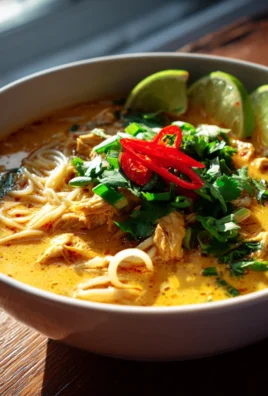
Thai Coconut Chicken Noodle Soup
Oh, prepare yourselves, because I’m about to share a recipe that will transport your taste buds straight to the bustling street food stalls of Thailand, all from the comfort of your own kitchen! This isn’t just any soup; this is my go-to Thai Coconut Chicken Noodle Soup, and trust me, it’s a revelation. What makes this particular recipe so incredibly special is its perfect harmony of flavors: the luxurious creaminess of coconut milk, the bright tang of lime, a gentle hum of spice, and the irresistible aromatics of ginger and lemongrass. It’s comforting, exotic, and unbelievably satisfying all at once, truly capturing the essence of authentic Thai cuisine.
I know you’re going to absolutely adore this soup because it hits all the right notes. Imagine a bowl full of tender, succulent chicken, perfectly cooked noodles, and a rich, fragrant broth that’s both warming and invigorating. It’s the kind of dish that makes you close your eyes and savor every single spoonful. Whether you’re craving something cozy on a chilly evening or an exciting burst of flavor to brighten your day, this soup delivers. It’s also surprisingly straightforward to make, meaning you can have a truly restaurant-worthy meal on your table faster than you might think.
In essence, we’re talking about a vibrant, creamy, and deeply flavorful soup featuring tender pieces of chicken, soft, slurpy noodles, and a silky coconut broth infused with classic Thai ingredients like lemongrass, ginger, and a hint of chili. It’s truly a hug in a bowl, with an exotic twist!

Ingredient Notes
Crafting a truly authentic and delicious Thai Coconut Chicken Noodle Soup begins with understanding the core ingredients. I’ve found that using high-quality components makes all the difference in achieving that perfect balance of creamy, spicy, savory, and sour.
Chicken: For this soup, I love using boneless, skinless chicken thighs. They stay incredibly tender and moist even after simmering in the broth, adding a wonderful richness. If you prefer, boneless, skinless chicken breasts work just as well; simply slice them thinner so they cook quickly and don’t dry out. You could even swap the chicken for thinly sliced beef or firm tofu for a different protein option.
Coconut Milk: This is the star of the show for that signature creamy texture. Always opt for full-fat coconut milk for the best flavor and consistency. Light coconut milk will result in a much thinner, less satisfying broth. If you can find it, canned coconut cream can be added for an extra luxurious finish.
Red Curry Paste: This paste provides the foundational spice and aromatic depth. I typically use a store-bought Thai red curry paste – look for one with minimal additives and good reviews. If you prefer a milder soup, you can use less paste, or if you like a fiery kick, add a bit more. Green curry paste is a suitable alternative if you prefer its flavor profile, though it will change the overall character slightly.
Aromatics: Fresh lemongrass, galangal (or ginger if galangal is unavailable), and kaffir lime leaves are non-negotiable for that authentic Thai fragrance. Lemongrass should be bruised to release its oils, galangal thinly sliced, and kaffir lime leaves torn. These infuse the broth with incredibly vibrant, citrusy, and earthy notes. Don’t skip them if you can help it!
Noodles: I usually reach for thin rice vermicelli noodles because they cook quickly and absorb the broth beautifully. However, ramen noodles, thin egg noodles, or even wider flat rice noodles are excellent choices. Cook them separately according to package directions and add them to individual serving bowls to prevent them from getting mushy in the main pot of soup.
Fish Sauce: This provides the essential salty, umami depth that is characteristic of Thai cuisine. A good quality fish sauce is key – it shouldn’t be overly salty or fishy. If you’re looking for a non-fish sauce alternative, a combination of soy sauce (or tamari for gluten-free) and a pinch of miso paste can offer a similar savory quality, though the flavor profile will differ slightly.
Lime Juice & Sweetener: Fresh lime juice brightens the entire soup with a crucial sour note. Don’t use bottled lime juice – the flavor isn’t the same. A touch of brown sugar or palm sugar helps balance the sour and spicy elements, completing the classic Thai flavor profile.
Broth: Use a good quality chicken broth or stock. A low-sodium option allows you to control the seasoning more precisely.
Step-by-Step Instructions
Whipping up a batch of Thai Coconut Chicken Noodle Soup is a delightful culinary journey. Here’s how I bring all those fantastic flavors together:
Step 1: Prep Your Ingredients. First, slice your chicken into bite-sized pieces. Thinly slice your galangal (or ginger), bruise your lemongrass stalks, and tear your kaffir lime leaves. Have your fish sauce, lime juice, and brown sugar measured out. Cook your noodles separately according to package directions, then drain and set aside, perhaps tossing with a tiny bit of oil to prevent sticking.
Step 2: Build the Flavor Base. In a large pot or Dutch oven, heat a tablespoon of neutral oil (like coconut or vegetable oil) over medium heat. Add your sliced chicken and cook until it’s just browned on the outside, but not fully cooked through. Remove the chicken from the pot and set aside.
Step 3: Bloom the Curry Paste and Aromatics. To the same pot, add the red curry paste. Sauté the paste for about 1-2 minutes, stirring constantly, until it becomes very fragrant and slightly darker. This step is crucial for deepening the flavor of the paste. Next, add your prepared lemongrass, galangal (or ginger), and kaffir lime leaves. Sauté for another minute until the aromatics are fragrant.
Step 4: Create the Creamy Broth. Pour in the chicken broth and stir well, scraping up any browned bits from the bottom of the pot. Bring the mixture to a simmer, then add the full-fat coconut milk. Stir gently until everything is well combined and the broth is smooth and creamy. Let it come back to a gentle simmer.
Step 5: Cook the Chicken and Simmer. Return the partially cooked chicken to the pot. Reduce the heat to low, cover, and let the soup gently simmer for about 10-15 minutes, or until the chicken is cooked through and tender. This simmering time also allows the flavors from the aromatics to fully infuse into the broth.
Step 6: Adjust Seasoning. Remove and discard the lemongrass stalks, galangal slices, and kaffir lime leaves – they’ve done their job and aren’t pleasant to eat. Now, it’s time to perfect the flavor balance. Stir in the fish sauce, fresh lime juice, and brown sugar. Taste the soup and adjust as needed: add more fish sauce for saltiness, more lime juice for tang, or more sugar for sweetness. If you want more heat, a pinch of chili flakes or a tiny bit more curry paste can be added here.
Step 7: Serve and Garnish. To serve, place a portion of the cooked noodles into individual serving bowls. Ladle the hot Thai Coconut Chicken Noodle Soup generously over the noodles. Garnish with fresh cilantro, Thai basil, bean sprouts, a wedge of lime, and a sprinkle of chopped red chilies or chili flakes for an extra kick. Enjoy immediately!
Tips & Suggestions
Making Thai Coconut Chicken Noodle Soup is a wonderful experience, and I’ve picked up a few tricks over the years to ensure it turns out perfectly every time:
- Taste, Taste, Taste: The most important tip for any Thai dish! Thai cuisine is all about balancing the four main flavors: sweet, sour, salty, and spicy. Don’t be afraid to adjust the fish sauce, lime juice, and sugar at the end until it suits your palate. A perfect bowl hits all these notes harmoniously.
- Spice Level: The amount of red curry paste determines the heat. Start with the recommended amount and then add more to your individual bowl if you like it spicier, perhaps with a dash of sriracha or some fresh sliced bird’s eye chilies.
- Fresh Aromatics are Key: While dried or powdered versions of ginger, lemongrass, or kaffir lime leaves can be used in a pinch, fresh ingredients will provide the most vibrant and authentic flavor profile. Bruising lemongrass stalks before adding them to the pot helps release their essential oils, intensifying the aroma.
- Noodle Strategy: Always cook your noodles separately and add them directly to individual serving bowls just before ladling in the soup. This prevents them from absorbing too much liquid and becoming mushy, especially if you plan on having leftovers.
- Garnishes Galore: Don’t skip the garnishes! Fresh cilantro, Thai basil, bean sprouts, thinly sliced red onion, lime wedges, and a sprinkle of chopped roasted peanuts or crispy fried shallots add incredible texture, freshness, and another layer of flavor to your soup.
- Add More Veggies: This soup is very customizable. Feel free to add quick-cooking vegetables like sliced mushrooms, bell peppers, spinach, or baby bok choy during the last 5-7 minutes of simmering.
- Protein Variations: While chicken is traditional, this soup is fantastic with other proteins. Thinly sliced beef, shrimp (add during the last 3-5 minutes of cooking until pink), or firm tofu (sautéed until golden before adding to the broth) are all delicious options.
Storage
Storing your delicious Thai Coconut Chicken Noodle Soup properly is crucial, especially to maintain its creamy texture and prevent the noodles from becoming overly soft. Here’s how I recommend handling leftovers:
Separate Components for Best Results: The ideal way to store this soup, particularly if you anticipate leftovers, is to store the broth with the chicken separately from the cooked noodles. Cooked rice noodles, in particular, will continue to absorb liquid and can become very mushy if left soaking in the broth for too long.
Refrigeration:
- Broth and Chicken: Allow the soup to cool completely to room temperature before transferring it to an airtight container. It can be stored in the refrigerator for up to 3-4 days.
- Noodles: Store any leftover cooked noodles in a separate airtight container in the refrigerator for up to 2-3 days. If they seem dry, you can toss them with a tiny bit of sesame oil or a splash of water before reheating.
Freezing:
- Broth and Chicken Only: The broth, with the chicken, freezes beautifully. Allow it to cool completely, then transfer it to freezer-safe containers or heavy-duty freezer bags, leaving some headspace for expansion. It can be frozen for up to 2-3 months.
- Noodles: I generally do not recommend freezing cooked rice or egg noodles as they tend to become very soft and lose their texture upon thawing and reheating. If you plan to freeze the soup, cook a fresh batch of noodles when you’re ready to serve.
Reheating:
- From Refrigerator: Gently reheat the broth and chicken in a saucepan over medium-low heat, stirring occasionally, until hot. You might need to add a splash of chicken broth or water if it has thickened too much. Reheat the noodles separately in the microwave or by quickly dunking them in hot water. Assemble in bowls and garnish as desired.
- From Freezer: Thaw the frozen soup (broth and chicken) overnight in the refrigerator or use the defrost setting on your microwave. Once thawed, reheat gently in a saucepan as described above. Cook fresh noodles and combine for serving.
Following these storage tips will help ensure that every bowl of your Thai Coconut Chicken Noodle Soup is as delicious as the first!
Final Thoughts
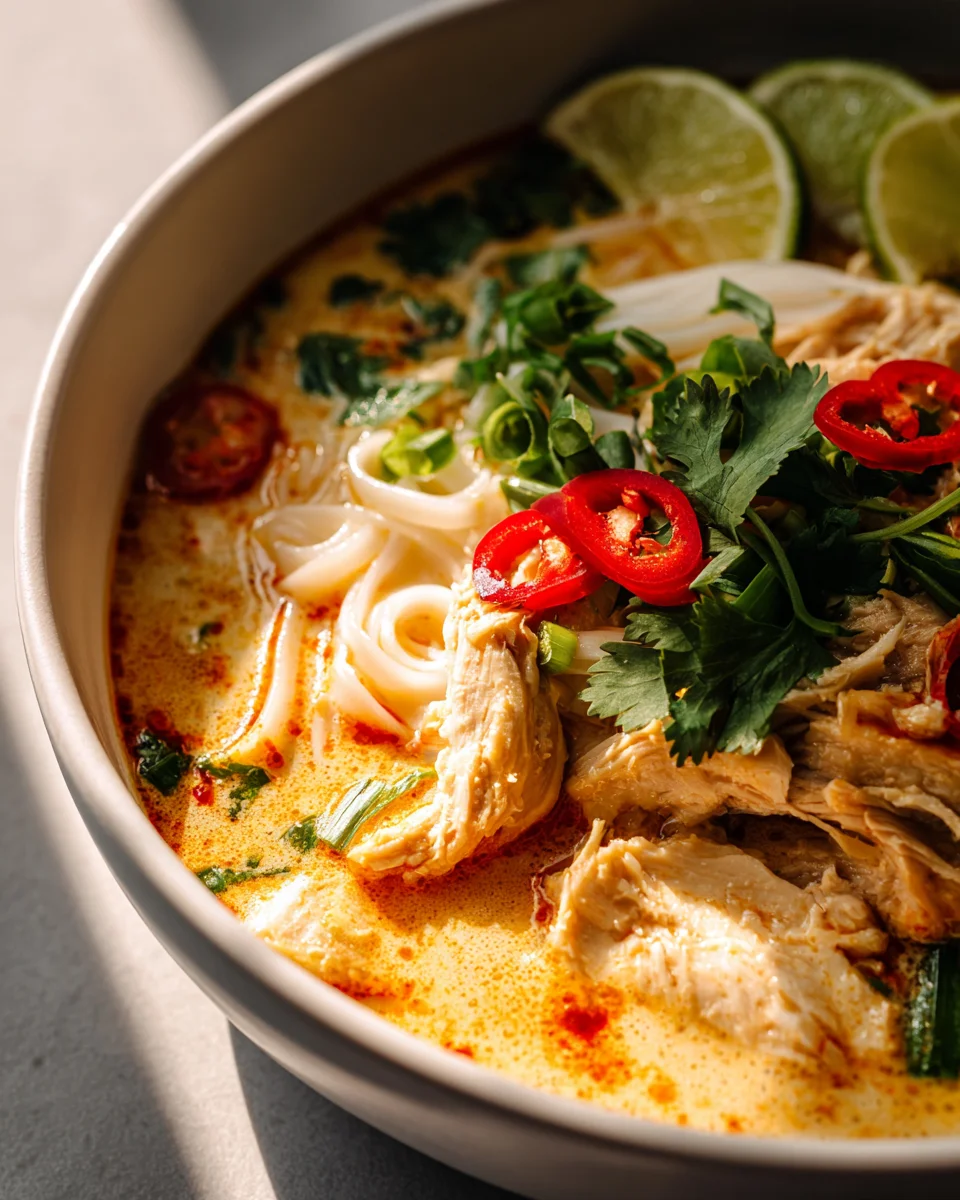
I truly believe that creating this Thai Coconut Chicken Noodle Soup will bring a little bit of sunshine and warmth straight into your kitchen. It’s more than just a meal; it’s an experience of vibrant flavors and comforting textures that perfectly balance the creamy richness of coconut milk with the zesty freshness of lime and fragrant spices. Every spoonful, with its tender chicken and satisfying noodles, offers that authentic taste of Thailand we all crave. I promise you, once you try this Thai Coconut Chicken Noodle Soup, you’ll understand why it’s become such a beloved dish in my home – it’s an absolute must-try for anyone looking to add a truly special and incredibly delicious meal to their repertoire. Go on, give it a whirl; your taste buds will thank you!
Creamy Thai Coconut Chicken Noodle Soup – Quick & Easy!

This Thai Coconut Chicken Noodle Soup is a vibrant and creamy dish that captures the essence of authentic Thai cuisine. With tender chicken, soft noodles, and a rich coconut broth, it’s a comforting meal that’s quick and easy to prepare.
- Prep Time: 15 mins
- Cook Time: 30 mins
- Total Time: 45 minutes
- Yield: 4 servings
- Category: Dinner
- Method: Cooking
- Cuisine: Thai
Ingredients
- boneless, skinless chicken thighs
- full-fat coconut milk
- red curry paste
- fresh lemongrass
- galangal or ginger
- kaffir lime leaves
- thin rice vermicelli noodles
- fish sauce
- fresh lime juice
- brown sugar or palm sugar
- chicken broth or stock
Instructions
- Step 1: Prep Your Ingredients. First, slice your chicken into bite-sized pieces. Thinly slice your galangal (or ginger), bruise your lemongrass stalks, and tear your kaffir lime leaves. Have your fish sauce, lime juice, and brown sugar measured out. Cook your noodles separately according to package directions, then drain and set aside, perhaps tossing with a tiny bit of oil to prevent sticking.
- Step 2: Build the Flavor Base. In a large pot or Dutch oven, heat a tablespoon of neutral oil (like coconut or vegetable oil) over medium heat. Add your sliced chicken and cook until it's just browned on the outside, but not fully cooked through. Remove the chicken from the pot and set aside.
- Step 3: Bloom the Curry Paste and Aromatics. To the same pot, add the red curry paste. Sauté the paste for about 1-2 minutes, stirring constantly, until it becomes very fragrant and slightly darker. Next, add your prepared lemongrass, galangal (or ginger), and kaffir lime leaves. Sauté for another minute until the aromatics are fragrant.
- Step 4: Create the Creamy Broth. Pour in the chicken broth and stir well, scraping up any browned bits from the bottom of the pot. Bring the mixture to a simmer, then add the full-fat coconut milk. Stir gently until everything is well combined and the broth is smooth and creamy. Let it come back to a gentle simmer.
- Step 5: Cook the Chicken and Simmer. Return the partially cooked chicken to the pot. Reduce the heat to low, cover, and let the soup gently simmer for about 10-15 minutes, or until the chicken is cooked through and tender.
- Step 6: Adjust Seasoning. Remove and discard the lemongrass stalks, galangal slices, and kaffir lime leaves. Stir in the fish sauce, fresh lime juice, and brown sugar. Taste the soup and adjust as needed.
- Step 7: Serve and Garnish. To serve, place a portion of the cooked noodles into individual serving bowls. Ladle the hot Thai Coconut Chicken Noodle Soup generously over the noodles. Garnish with fresh cilantro, Thai basil, bean sprouts, a wedge of lime, and a sprinkle of chopped red chilies or chili flakes for an extra kick.
Nutrition
- Serving Size: 1 bowl
- Calories: 450
- Sugar: 5 g
- Sodium: 800 mg
- Fat: 25 g
- Saturated Fat: 15 g
- Unsaturated Fat: 5 g
- Trans Fat: 0 g
- Carbohydrates: 40 g
- Fiber: 2 g
- Protein: 25 g
- Cholesterol: 70 mg
Keywords: Taste is crucial in Thai cuisine; adjust fish sauce, lime juice, and sugar to suit your palate. Fresh ingredients provide the best flavor, and cooking noodles separately prevents them from becoming mushy.