
Homemade Stuffing has a special place in the hearts and kitchens of families around the world. This beloved dish has a rich history, often gracing tables during festive occasions, especially Thanksgiving and Christmas. The magic of Homemade Stuffing lies in its ability to bring people together, evoking memories of laughter and love shared around the dinner table. Whether it’s the comforting aroma wafting through the kitchen or the savory bites that perfectly complement a roasted turkey, this dish is more than just a side; it’s a tradition that we cherish and celebrate. With every scoop, we experience a taste of nostalgia that reminds us of our roots and the warmth of home-cooked meals.
What Is Homemade Stuffing
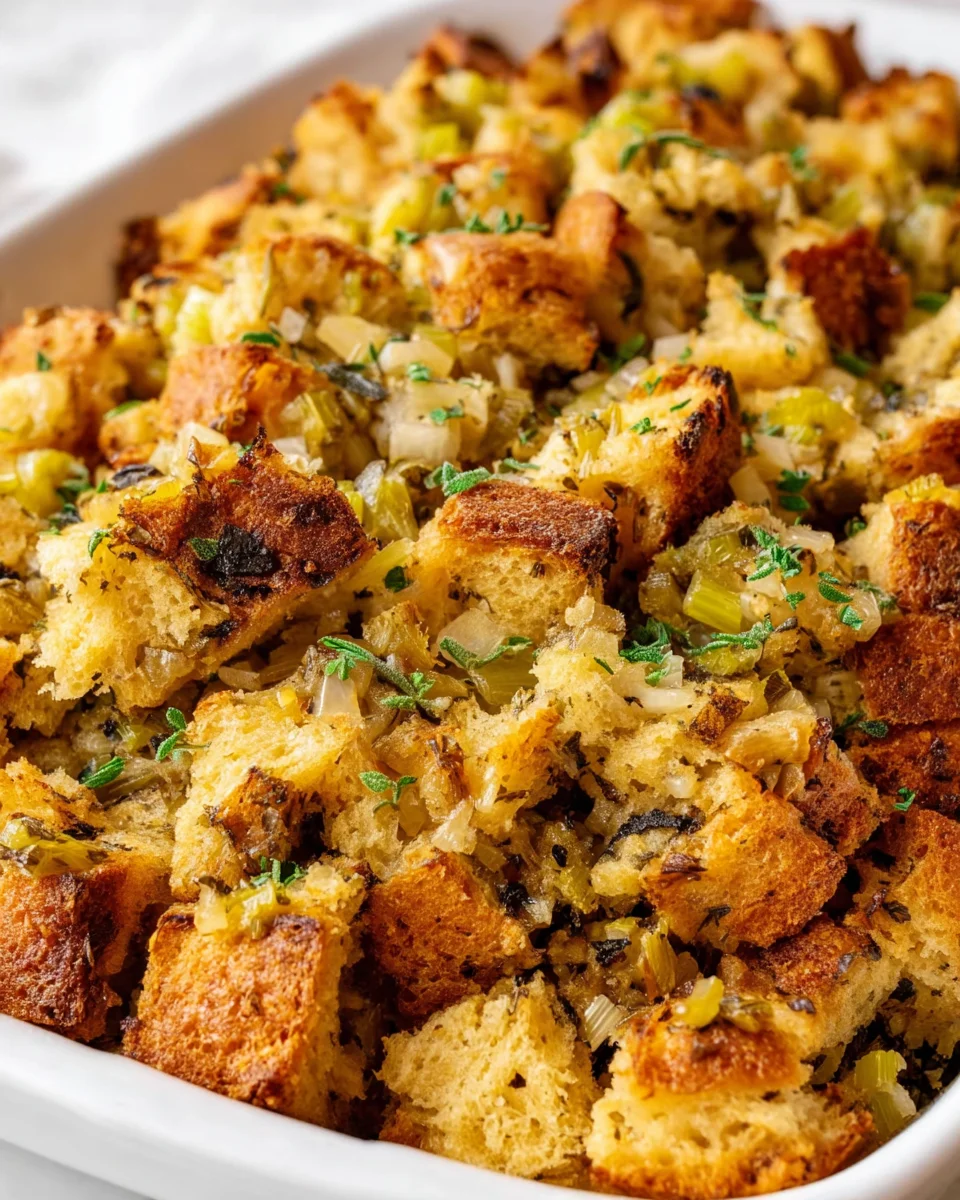
Homemade Stuffing is a delicious blend of bread cubes, aromatic herbs, and a medley of vegetables, all baked to perfection. Its texture is a delightful contrast—crispy on the outside yet soft and savory on the inside. What sets Homemade Stuffing apart from store-bought versions is the ability to customize it with your favorite ingredients, making it uniquely your own. While some might compare it to dressing, which is typically cooked outside of the bird, stuffing is traditionally cooked inside the turkey, allowing it to absorb those rich drippings. However, my recipe focuses on a baked version that maintains all the flavor without the fuss.
Why You’ll Fall in Love with This Recipe
- Easy to make with simple ingredients.
- Absolutely delicious, with layers of flavor.
- Family-friendly—perfect for all ages.
- Customizable to suit your taste preferences.
- A comforting dish that brings back fond memories.
How Does It Taste?
The flavor profile of Homemade Stuffing is a beautiful medley of savory, herby, and subtly sweet notes. Picture the buttery richness of sautéed onions and celery, the earthy tones of sage and thyme, and the delightful crunch of toasted bread. Each bite offers a burst of flavor, with a hint of garlic and a warm, inviting aroma that envelops you. The texture is equally enticing, with the crispy top layer giving way to a moist and flavorful center that feels like a warm hug on your palate. It’s a dish that truly embodies the essence of comfort food.
Health & Ingredient Benefits
Key ingredients in Homemade Stuffing offer various health benefits:
- Whole grain bread: High in fiber, aiding digestion and promoting heart health.
- Celery: Low in calories and rich in antioxidants, perfect for hydration.
- Onions: Packed with vitamins and minerals, known for their immune-boosting properties.
- Herbs like sage and thyme: Not only add flavor but also contain anti-inflammatory benefits.
With Homemade Stuffing, you’re not just creating a dish; you’re crafting a heartfelt experience that nourishes both body and soul.

Ingredients You’ll Need
- 8 cups day-old bread, cubed – This forms the base of your stuffing, providing structure and texture.
- 1/2 cup unsalted butter – Adds richness and moisture to the stuffing.
- 1 medium onion, diced – Contributes sweetness and depth of flavor.
- 2 stalks celery, diced – Adds crunch and a fresh element to the dish.
- 2 cups low-sodium chicken or vegetable broth – Keeps the stuffing moist and infuses flavor throughout.
- 1 tablespoon fresh sage, chopped – Offers a warm, earthy flavor that complements the bread.
- 1 tablespoon fresh thyme, chopped – Adds a fragrant aroma and herbal note to the stuffing.
- 1 teaspoon salt – Enhances all the flavors in the dish.
- 1/2 teaspoon black pepper – Provides a mild heat and balances the flavors.
- 1/2 cup dried cranberries or raisins (optional) – Adds a touch of sweetness and a pop of color.
Tools You’ll Need
- Large mixing bowl – For combining your ingredients.
- Sauté pan – To cook the vegetables.
- Oven-safe baking dish – To bake the stuffing in.
- Wooden spoon – For mixing the stuffing.
- Measuring cups and spoons – To ensure accurate ingredient amounts.
- Sharp knife – For chopping vegetables.
Optional Substitutions & Additions
- Gluten-free bread – For a gluten-free version, use gluten-free bread instead of traditional bread.
- Dairy-free butter – Replace unsalted butter with a dairy-free alternative to make it dairy-free.
- Chopped nuts (like walnuts or pecans) – Add for extra crunch and flavor.
- Spice variations – Consider adding a pinch of nutmeg or coriander for additional warmth.
How to Make Homemade Stuffing
Step 1: Prepare the Bread
Begin by cubing your day-old bread into bite-sized pieces. Spread them out on a baking sheet and toast in a preheated oven at 350°F (175°C) for about 10 minutes, or until lightly golden and dried out. This will help the bread absorb the broth without becoming mushy.
Step 2: Sauté the Vegetables
In a large sauté pan, melt the butter over medium heat. Add the diced onion and celery, cooking until they are soft and translucent, about 5 to 7 minutes. Stir occasionally to prevent burning. You want the onions to be just starting to turn golden.
Step 3: Combine Ingredients
In your large mixing bowl, combine the toasted bread cubes with the sautéed vegetables. Add the chopped sage, thyme, salt, pepper, and dried fruit if using. Toss gently to mix everything together, ensuring the herbs and vegetables are evenly distributed.
Step 4: Add the Broth
Slowly pour in the broth, mixing as you go. You want the bread to be moist but not soggy, so adjust the amount of broth according to your preference. If you’re unsure, start with 1.5 cups and add more as needed.
Step 5: Bake the Stuffing
Transfer the mixture to an oven-safe baking dish, spreading it out evenly. Cover with aluminum foil and bake in a preheated oven at 350°F (175°C) for 30 minutes. After 30 minutes, remove the foil and bake for an additional 15 minutes or until the top is golden brown and crispy.
What to Serve With
Homemade stuffing pairs beautifully with roasted turkey, chicken, or pork. For sides, consider mashed potatoes, green beans, or cranberry sauce. A light white wine or apple cider complements the flavors wonderfully.
Tips for Success
- Use stale bread for the best texture; day-old bread absorbs the broth better than fresh.
- Feel free to customize the herbs and spices to suit your taste; fresh herbs provide a vibrant flavor.
- Make ahead: Assemble the stuffing the day before and refrigerate it until you’re ready to bake.
- Keep an eye on your stuffing in the oven; every oven is different, so adjust baking times as needed.
Common Mistakes to Avoid
- Using fresh bread: Fresh bread can lead to a soggy stuffing, so always use day-old or toasted bread.
- Overcooking the vegetables: They should be soft but not browned, as browning can lead to a bitter taste.
- Not tasting: Always taste your mixture before baking to adjust seasoning as needed.
- Skipping the broth: Ensure you add enough broth to keep the stuffing moist; too little will result in dry stuffing.
How to Store & Reheat
Storing
Allow the stuffing to cool completely before transferring it to an airtight container. It can be stored in the refrigerator for up to 3 days or frozen for up to 2 months. If freezing, consider portioning it out for easier reheating.
Reheating
To reheat, preheat your oven to 350°F (175°C). Place the stuffing in an oven-safe dish, cover with foil, and bake for about 20 minutes. If frozen, allow it to thaw overnight in the refrigerator before reheating. You can also reheat in the microwave in short intervals, stirring in between.
Frequently Asked Questions
- Can I make stuffing without broth? While broth adds flavor, you can use water or a vegetable stock as an alternative, though it may not be as rich.
- How do I make stuffing vegetarian? Simply use vegetable broth instead of chicken broth and omit any meat products.
- Can I use fresh herbs instead of dried? Yes, just remember that fresh herbs are more potent, so use about three times the amount of fresh herbs compared to dried.
- What is the best bread for stuffing? A mix of sourdough and white bread works best for flavor and texture, but feel free to experiment with your favorites.
Nutritional Info
Homemade stuffing typically contains around 200-250 calories per serving, depending on the ingredients used. It generally offers a balance of carbohydrates from the bread, fats from the butter, and some protein from any added ingredients. Keep in mind that adding nuts or dried fruit can increase the calorie count.
Final Thoughts
In conclusion, my recipe for Homemade Stuffing is truly a must-try for anyone looking to elevate their meal to the next level. The combination of savory herbs, fresh vegetables, and hearty bread creates a delightful symphony of flavors that perfectly complements any dish. Whether you’re preparing for a festive gathering or simply want to enjoy a comforting side, Homemade Stuffing brings warmth and joy to the table. Trust me, once you try this recipe, you’ll understand why it’s a beloved staple in so many homes. So gather your ingredients, and let’s make some delicious memories with Homemade Stuffing!
Homemade Stuffing
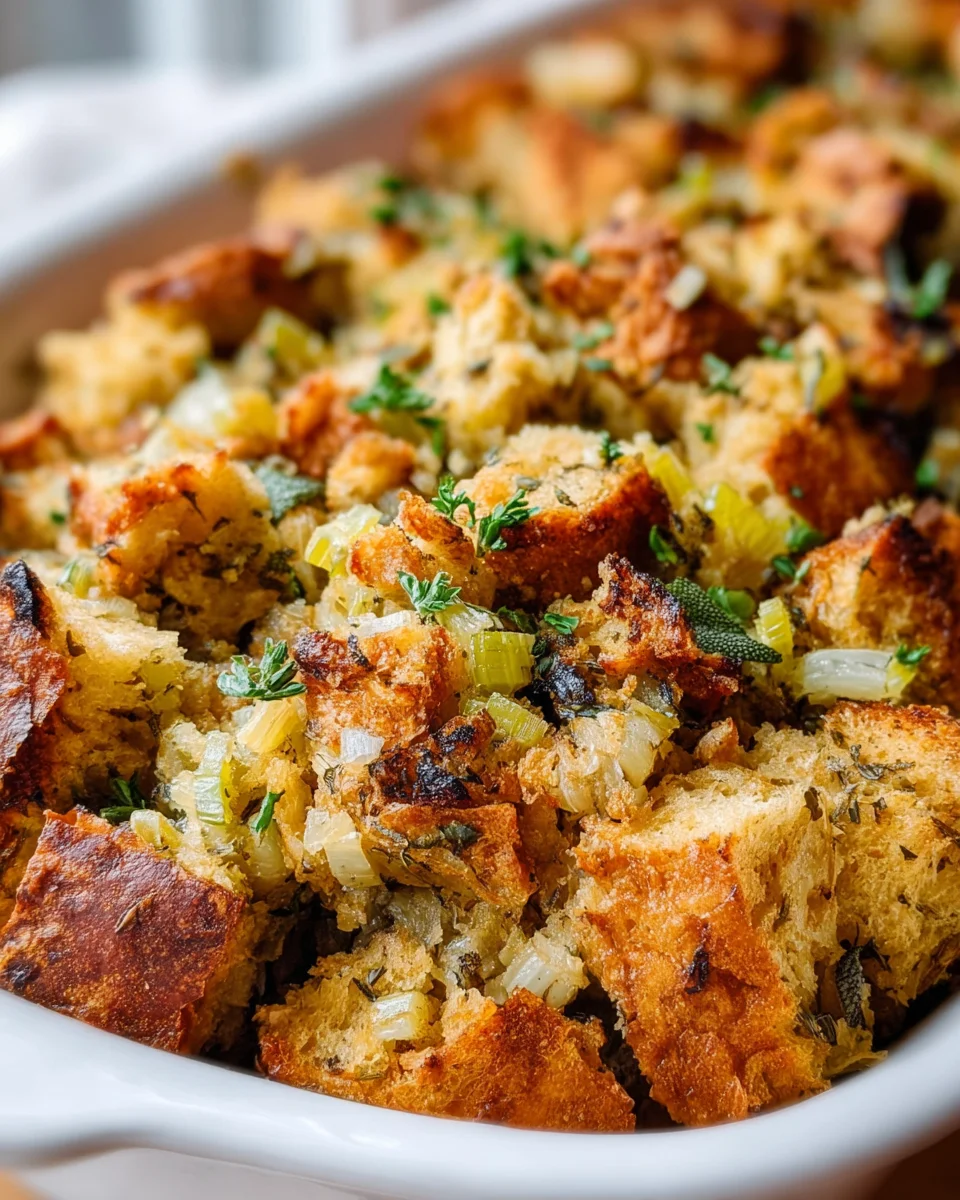
A traditional recipe for Homemade Stuffing made with dried bread cubes mixed with onions and celery sauteed in plenty of butter then mixed with herbs and broth and baked until golden and delicious! It is the perfect stuffing recipe for your Thanksgiving table! Can easily be doubled for a crowd.
Ingredients You’ll Need
- 12 cups Stale White Bread, cut into 1 inch cubes
- 3/4 cup plus 2 tbsp Butter, divided
- 1 large Yellow or White Onion, chopped
- 2 cups Celery, chopped
- 1 1/2 tsp Kosher Salt
- 1 tsp Black Pepper
- 1 tsp Poultry Seasoning
- 1/2 tsp Marjoram
- 3 tbsp Fresh Sage, chopped
- 1/3 cup Fresh Parsley, chopped
- 2 Eggs
- 1 cup Chicken Broth or Stock
Instructions
- Step 1
Prepare stale bread cubes. - Step 2
Combine bread with sautéed vegetables, herbs, and broth. - Step 3
Transfer to baking dish and bake until golden.
Important Information
Nutrition Facts
Per serving: ~350 calories. Based on a 2000 calorie diet.
Allergy Information
Always check labels for specific allergen information.